
Editorial Team

Name: Tawanda Mushiri
Email: tmushiri@sirdc.ac.zw
Tawanda Mushiri is a Professor of Artificial Intelligence and the Executive Director – Technical for SIRDC Zimbabwe supervising and coordinating Directors of the following 12 institutes as from 1 March 2024 (BRI, BTI, ECI, ETI, ESI, FBTI, GRSI, II, MRI, NMI, PMSI, PEI & TIPS) https://sirdc.ac.zw/management/ His key roles at SIRDC are: Overseeing the general operations of the Institutes, Overseeing professional development of Scientists, Overseeing the management of projects through the Stage Gate business model by Prof R. Cooper, Overseeing the protection and management of the Centre’s Intellectual Property Assets, Providing leadership in project management and marketing of SIRDC to stakeholders.
His research areas are Artificial Intelligence and Medical Robotics. He has developed a patent for a Robotic First Aid (RFA) system to reduce Road Traffic Accidents (RTA). He has been appointed the Point Person and Facilitator of the Ethics of Artificial Intelligence (AI) Readiness Assessment Methodology (RAM) for Zimbabwe and the Zimbabwe's Artificial Intelligence (AI) strategy under Ministry of ICTPCS which have been all launched and published. He has managed to do projects and grants up to USD$3,5m.

Name: Ms Fungai Nora Mukora (Vice Chairperson)
Email Adress: fmukora@ceic.uz.ac.zw
Ms Fungai Nora Mukora is the Dean of the Faculty of Computer Engineering, Informatics, and Communications at the University of Zimbabwe (UZ). She holds a master’s degree in computer science and is pursuing a PhD in Engineering. With over 15 years of experience, Fungai has significantly contributed to developing ICT education and digital transformation in Zimbabwe. Fungai holds leadership positions in the ICT Association of Zimbabwe and the POTRAZ ICT Journal Editorial Committee, and she serves on the board of Metbank. Her research interests include the Fourth Industrial Revolution, Digital Transformation, ICT Adoption, and the education needs of children during emergencies.

Name: Engineer Freddy Gweme (Editorial Board Member)
Email Adress: fgweme@sirdc.ac.zw ; fgweme@gmail.com
Engineer Freddy Gweme is a seasoned professional in the ICT industry. He currently serves as the Director of ICT at the Scientific and Industrial Research and Development Centre (SIRDC) in Zimbabwe. His academic qualifications include a BSc (Eng) Hons, an MPhil in Computer Engineering, and an Executive MBA. With over two decades of experience, Eng F. Gweme has been instrumental in developing innovative ICT products and systems. His contributions to national e-waste management policy and his extensive publications in ICT underscore his expertise and influence in the field.

Name: Professor Philimon Nyamugure (Editorial Board Member)
Email Adress: philimon.nyamugure@nust.ac.zw
Professor Philimon Nyamugure holds a PhD in Operations Research, an MSc in Operations Research and Statistics, BSc (Hons) in Applied Mathematics, and a Post Graduate Diploma in Higher Education. He is the Executive Dean-Faculty of Applied Science at the National University of Science Technology. He is a former Fulbright Research Award for African Scholars recipient, during which he developed a Data Science and Analytics programme. His research interests include the development of optimisation algorithms, statistical surveys, big data analytics, and analysing non-deterministic polynomial challenging problems.

Name: Professor Walter Matli (Editorial Board Member)
Email Adress: wmatli7@gmail.com
Professor Walter Matli is an associate professor at the University of South Africa Business School, specialising in ICT for Development (ICT4D). His research delves into critical issues such as the digital divide, ICT access and utilisation for development in African societies, remote working, AI in education and healthcare, digital work, and the challenges faced by young people not in education, employment, or training (NEETs). A strong advocate for harnessing technological advancements to drive Africa's development, Matli focuses on empowering disadvantaged communities, ensuring that rapid technological growth does not exacerbate societal inequalities.

Name: Dr Gardner Mwansa (Editorial Board Member)
Email Address: gmmwansa@gmail.com ; gmwansa@wsu.ac.za
Dr Gardner Mwansa is a Senior Lecturer at Walter Sisulu University in South Africa. He specialises in agile methodologies, cloud computing, the Internet of Things (IoT), cybersecurity, and educational technology. His pioneering research focuses on integrating agile development with cloud environments to enhance adoption and utilisation in South Africa. Dr Mwansa’s ongoing projects explore secure and efficient IoT deployment in resource-constrained environments.
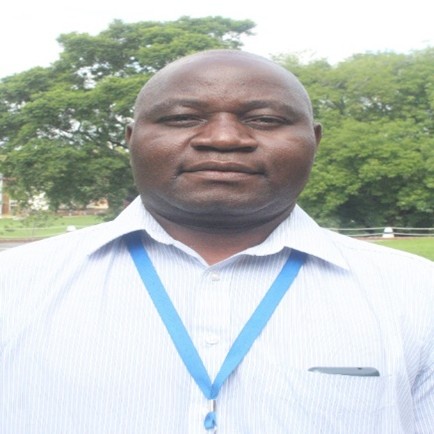
Name: Professor Maxwell Sandada (Editorial Board Member)
Email Address:sandada@potraz.zw
Professor Maxwell Sandada is a Professor of Business and Deputy Director of Research and Development at the Postal & Telecommunications Authority of Zimbabwe (POTRAZ), a distinguished scholar, global authority on Strategic Management and a technocrat with over seventeen (17) years of extensive experience including lecturing, research and publications, policy advisory and consultancy work in Strategy and Innovation. As an academic, he has supervised several Doctor of Philosophy (PhD) degrees to successful completion and several other postgraduate students in the field of Business. He has examined numerous doctoral theses (Ph.Ds.) and published extensively in the field of Business Management. He is an external examiner of many institutions in Zimbabwe and beyond.

Name: Gilford Hapanyengwi (Editorial Board Member)
Email Address: babaticha@gmail.com
Gilford is currently the ICT Director at the Zimbabwe Council for Higher Education. Before that, he was at the University of Zimbabwe as the Director of ICT and lectured in various Computer Science and Information Systems-related courses. He has experience leading teams that have successfully rolled out solutions involving infrastructure, systems, people, and processes. He is a researcher who has published internationally, regionally, and locally in several fields that include Database Systems, Data Analytics, the Internet of Things, Information Systems, the Use of ICTs in teaching & learning, and the Use of ICTs in business.